About us

The people behind your suit

Ash Tailor Samui

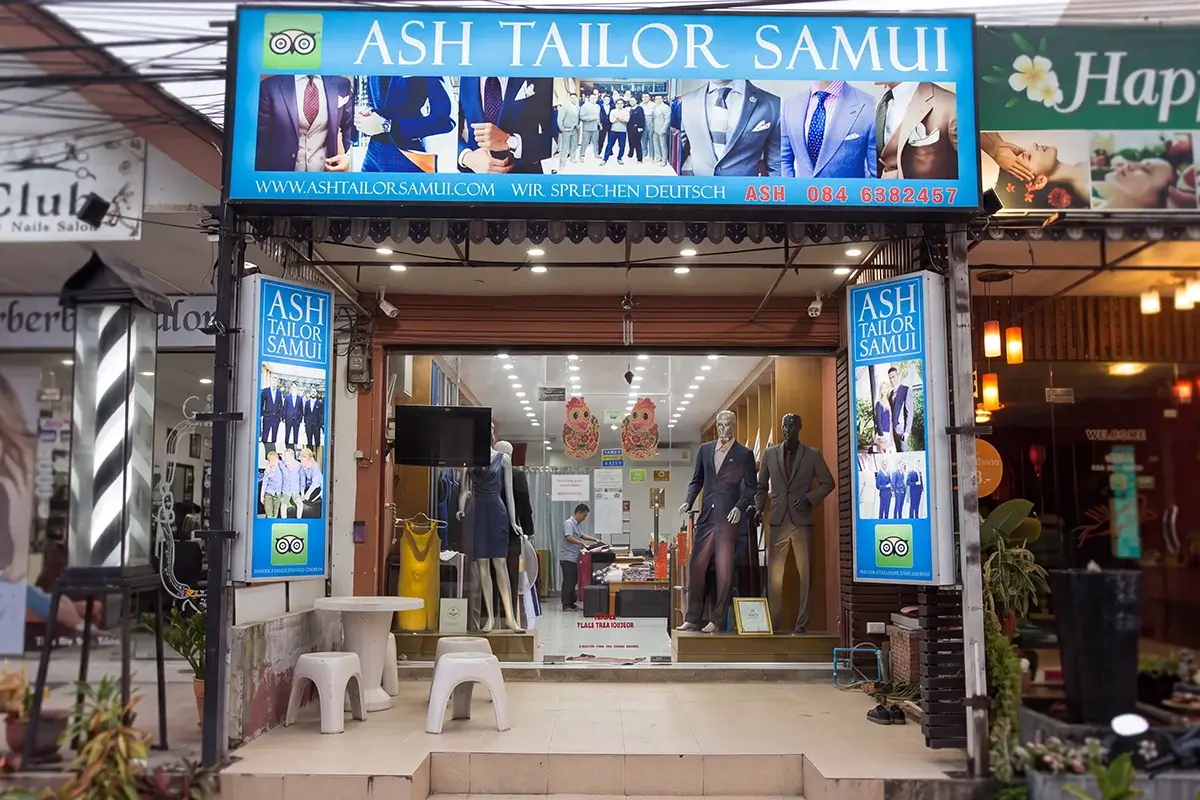
We’ve been cutting cloth for twenty years, the last ten of them from our shop in Bophut, opposite Bandara Resort. This is how we work, and why it takes as long as it does.

Someone walks in on a Tuesday with a wedding on Saturday and nothing to wear. We take his measurements, and we tell him it will be ready. It is ready.

Ash learned the trade from his mother in Mumbai. She taught him to cut and sew before he was old enough to make a living from it, and he served his apprenticeship there — the long way around, the way it used to be done, on other people’s garments before ever putting his own name above a door.

It was his brother who suggested Koh Samui. The first shop was in Maenam. Ten years ago we moved to Bophut, opposite Bandara Resort, where we’ve been ever since.

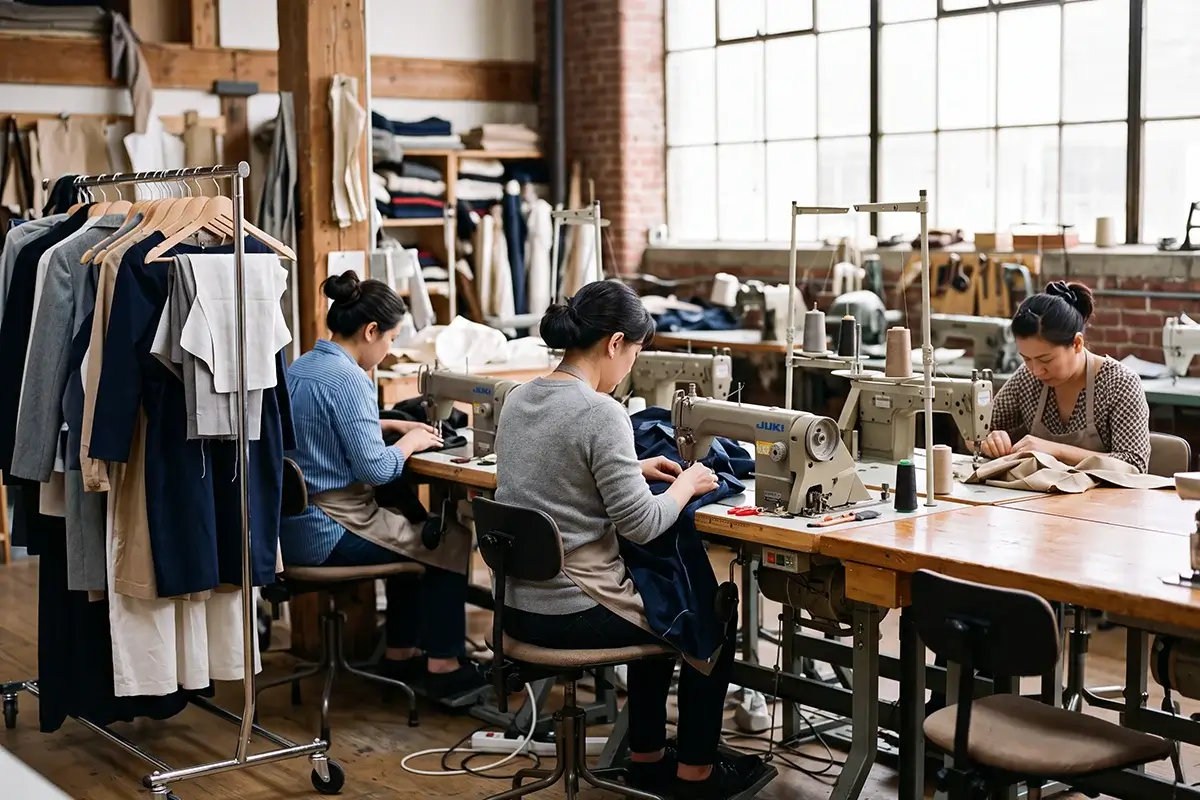
Our workshop runs with fourteen tailors, making jackets, trousers, shirts and dresses. Some of our customers come once, for a wedding or a holiday. Others have been sending us their measurements from Europe for years and haven’t set foot on the island since.

The shop front, Bophut
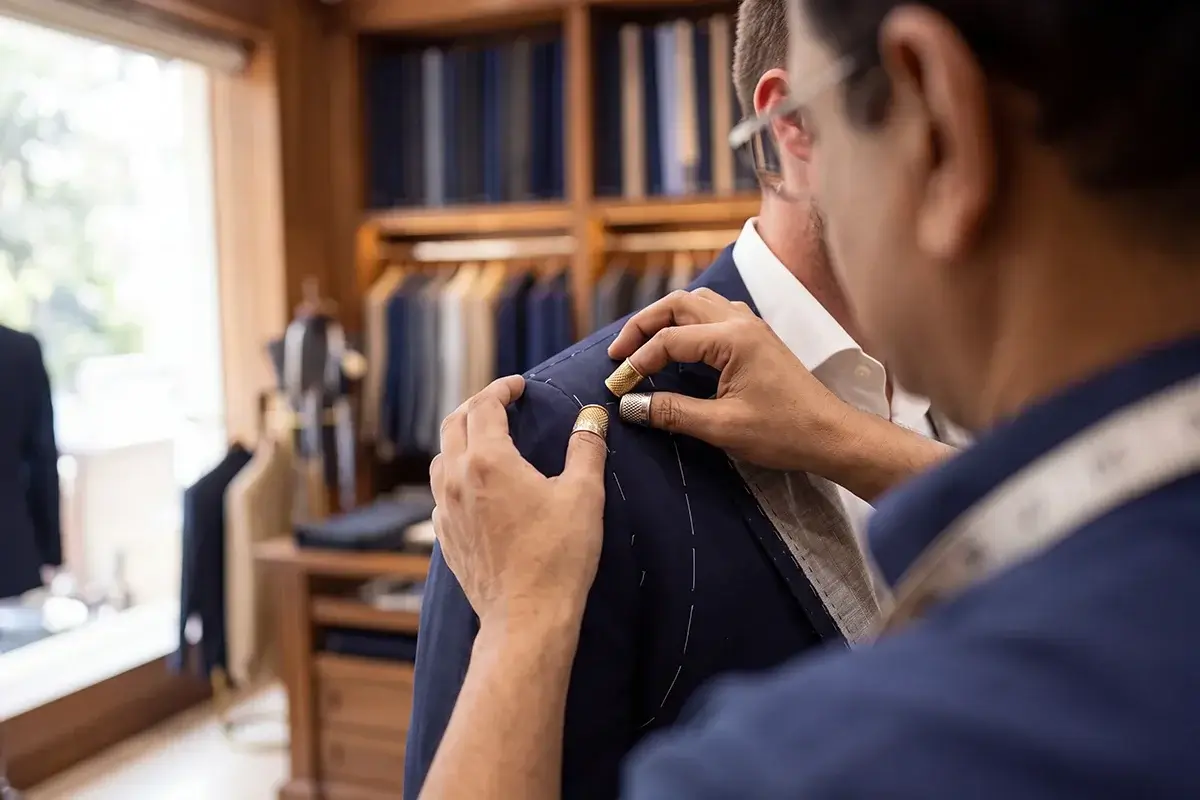
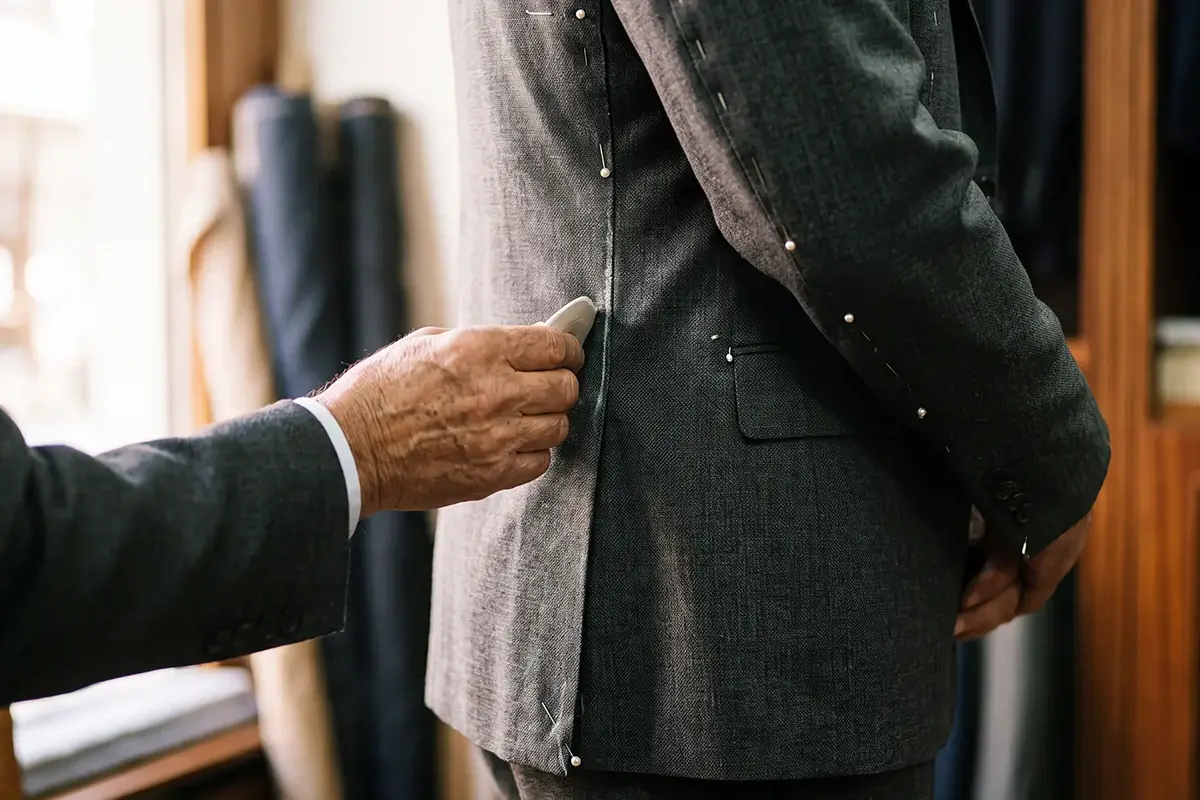
Mid-fitting with a customer
Beyond the island

We’ll come to you

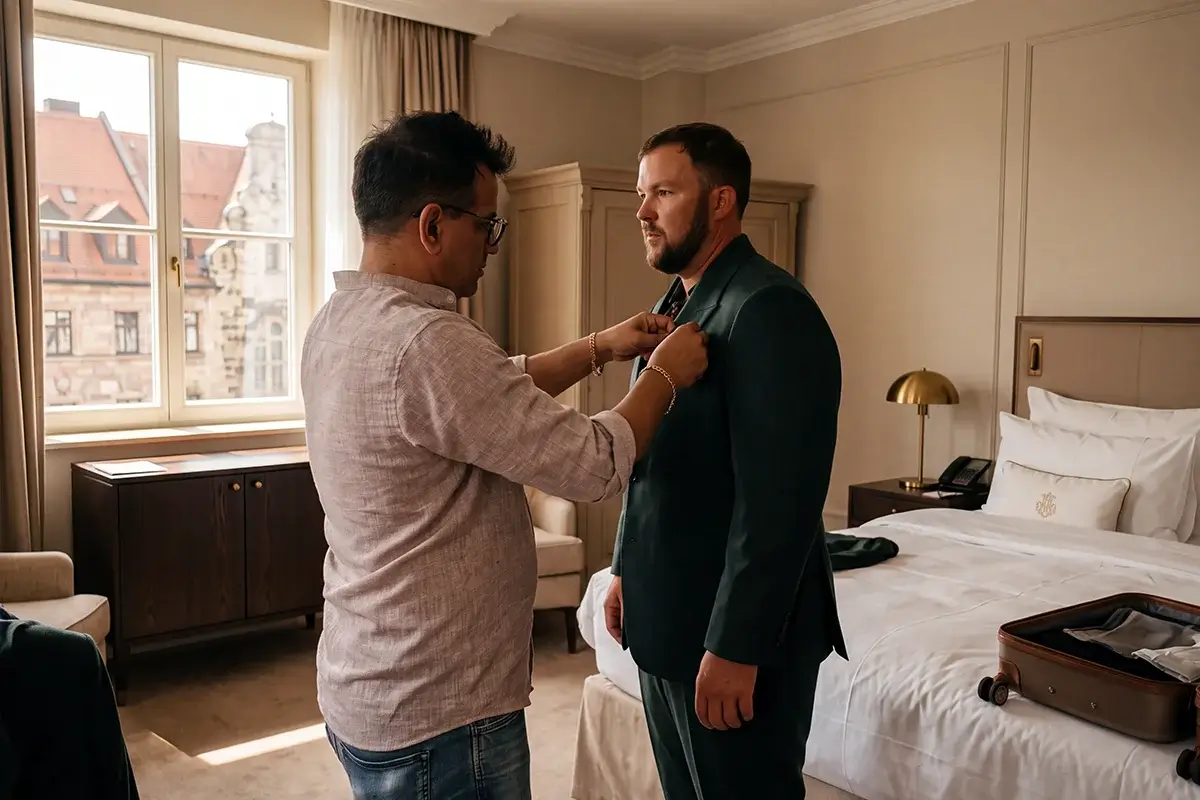
Fitting on location in Europe

For larger orders — a wedding party, a family occasion, a full wardrobe — we travel to Europe each autumn to measure and fit clients in person. We’re usually in Switzerland, Germany and France between September and November.

Recent trips have included fittings for an entire wedding party, with the finished garments delivered well ahead of the day. If you’re planning something for next year, please contact us in touch, and we’ll talk through the options.

Craftsmanship

How a suit is actually made

A machine can sew a straight seam. It can’t shape a chest, ease a sleeve head, or make a collar sit flat against the back of your neck. That’s our work, and here’s how it goes between you walking in and walking out.

1. We talk first
01 · We talk first.
We ask what it's for, when you need it, and how you want to feel wearing it. A suit for a beach wedding in March isn't the same garment as one for a board meeting in Zurich.
2. Choosing the cloth
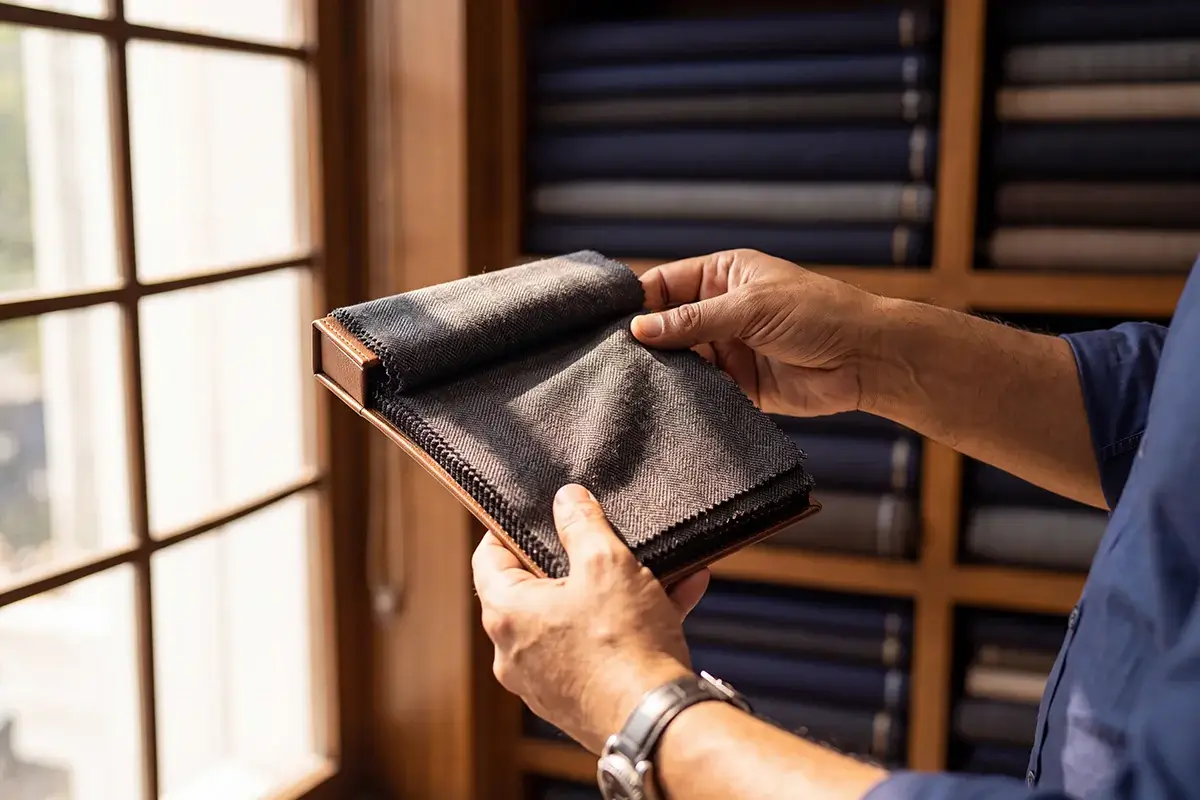
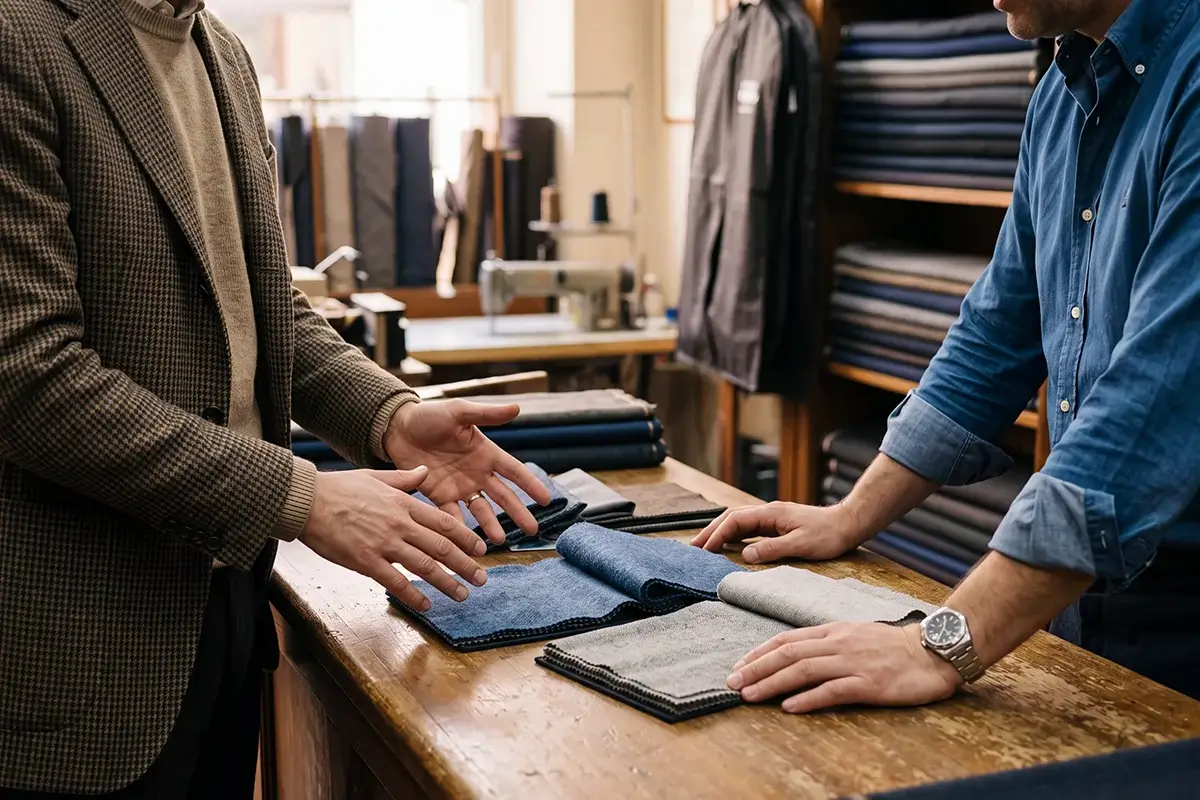
02 · Choosing the cloth
We work with merino wool, Egyptian and birdseye cotton, linen, cashmere, tweed and Thai silk, from mills in Thailand, Italy and England. Out here the weight of the cloth matters more to us than the name on the selvedge.
3. Measuring
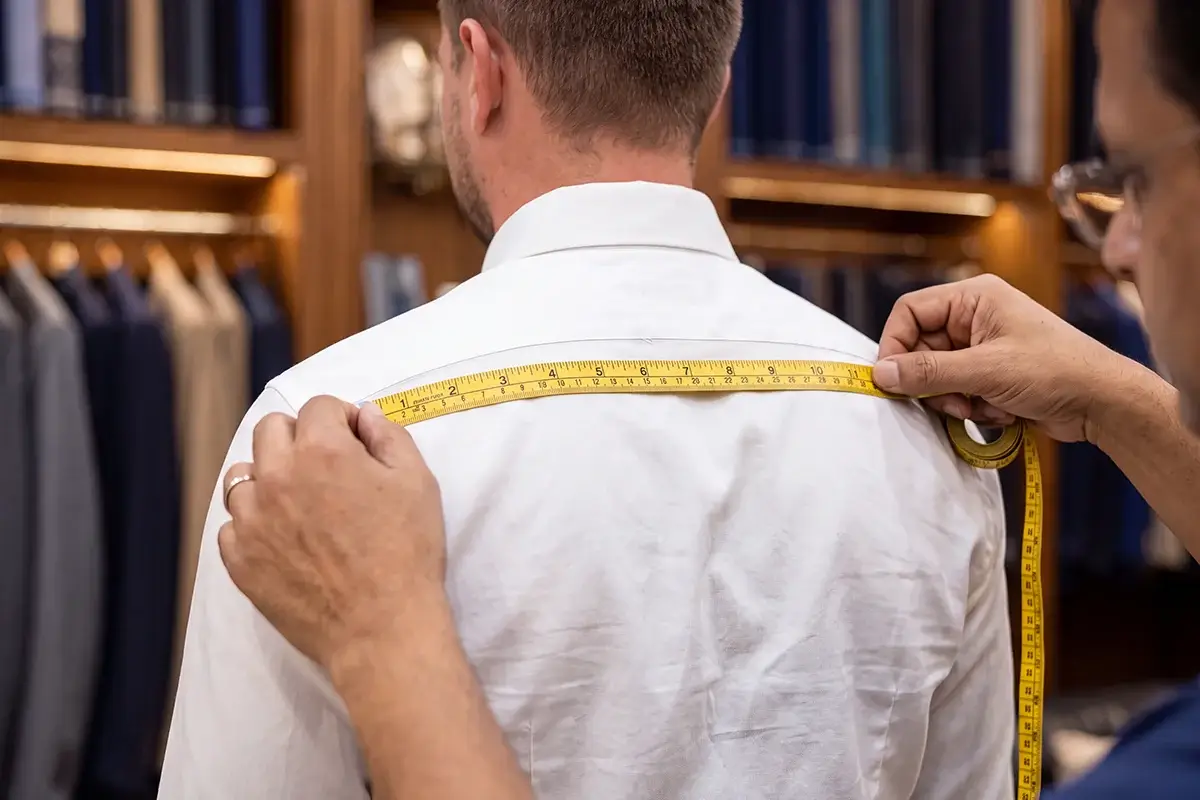
03 · Measuring
We take more than chest and waist. Shoulder slope, posture, whether one arm hangs lower than the other — the things that decide whether a jacket sits or pulls.
We keep your measurements on file. Order again from home, and we already know how you're built.
4. Cutting
04 · Cutting
Chalk on cloth, and we cut by hand to your pattern and no one else's. Every suit starts as a paper pattern drawn from your measurements, which we keep — so the second suit fits like the first, and the tenth fits like the second.
Our jackets are canvassed through the front. A layer of canvas is floated between the cloth and the lining and shaped to your chest, rather than glued flat like a fused jacket. This process takes longer to complete, moulds the jacket to your body over time, and creates a noticeable difference in comfort when you wear it.
5. First fitting
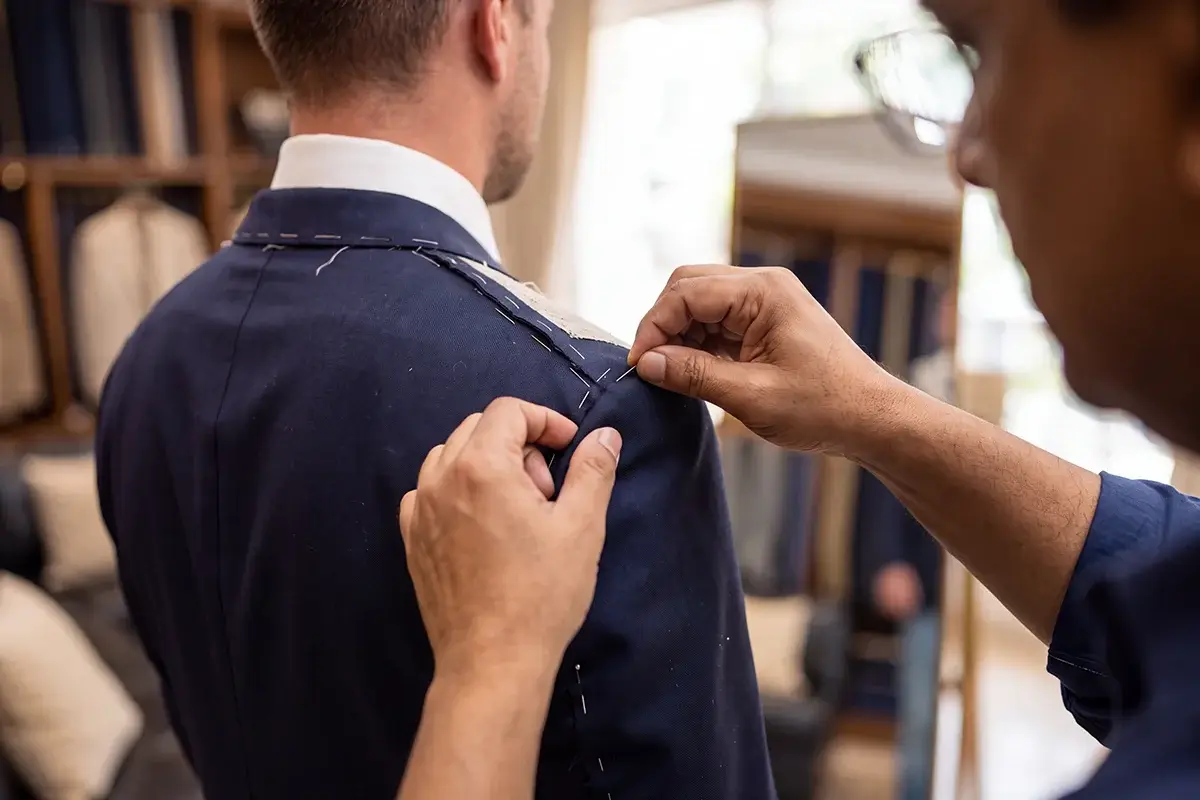
05 · Fittings
Three to four fittings for a suit, with the garment coming back to our table between each one. That's why we ask for time, and it's the part that can't be rushed.
We half-line our trousers to the knee — comfortable against the skin and considerably cooler than a full lining out here.
6. Finishing by hand
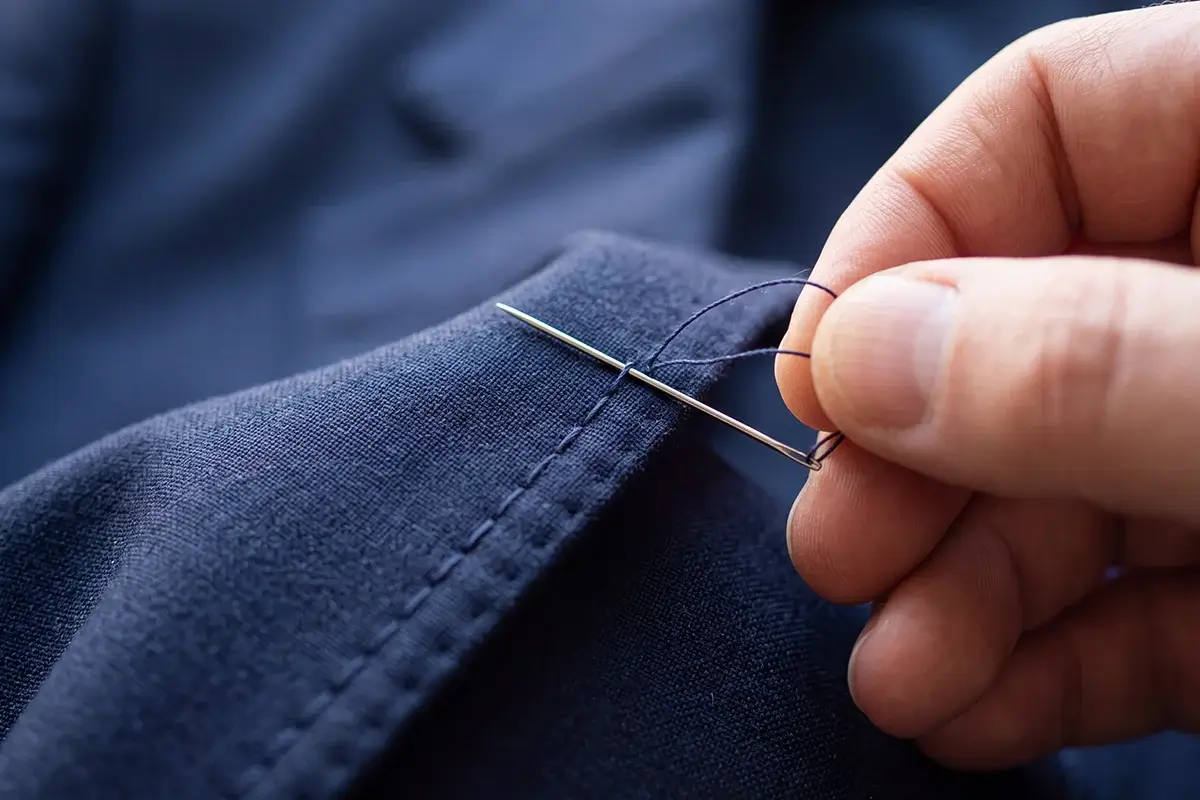
06 · Finishing by hand
The last details are what separate a tailored garment from a well-made factory one, and we do all of them with a needle rather than a machine.
We pick the edges by hand on lapels, collars and pockets so the cloth rolls softly instead of lying flat. Our buttonholes work — sewn open at the cuff, not stitched shut for show. And we double stitch and bar tack everywhere the garment takes strain.